
Asphalt vs concrete pickleball court
Asphalt usually costs less and goes in faster, while concrete tends to last longer and copes better with freezing winters. You'll see both used outdoors all the time. Which one fits you depends on what you can spend, the weather where you live and how many years you want from the court.
Comparing the two bases
A court has a painted top coat called the acrylic surface. Acrylic is the paint-like coating that gives a court its color, its grip and its lines. Under it sits the base, the hard layer of asphalt or concrete.
The prices below are for one court built on a standard pad. A pad is the flat area the court is built on.
One painted asphalt court costs $8,800 to $26,500. It takes 3 to 5 days to build, then two weeks to a month before it can be painted. It lasts about 10 to 15 years.
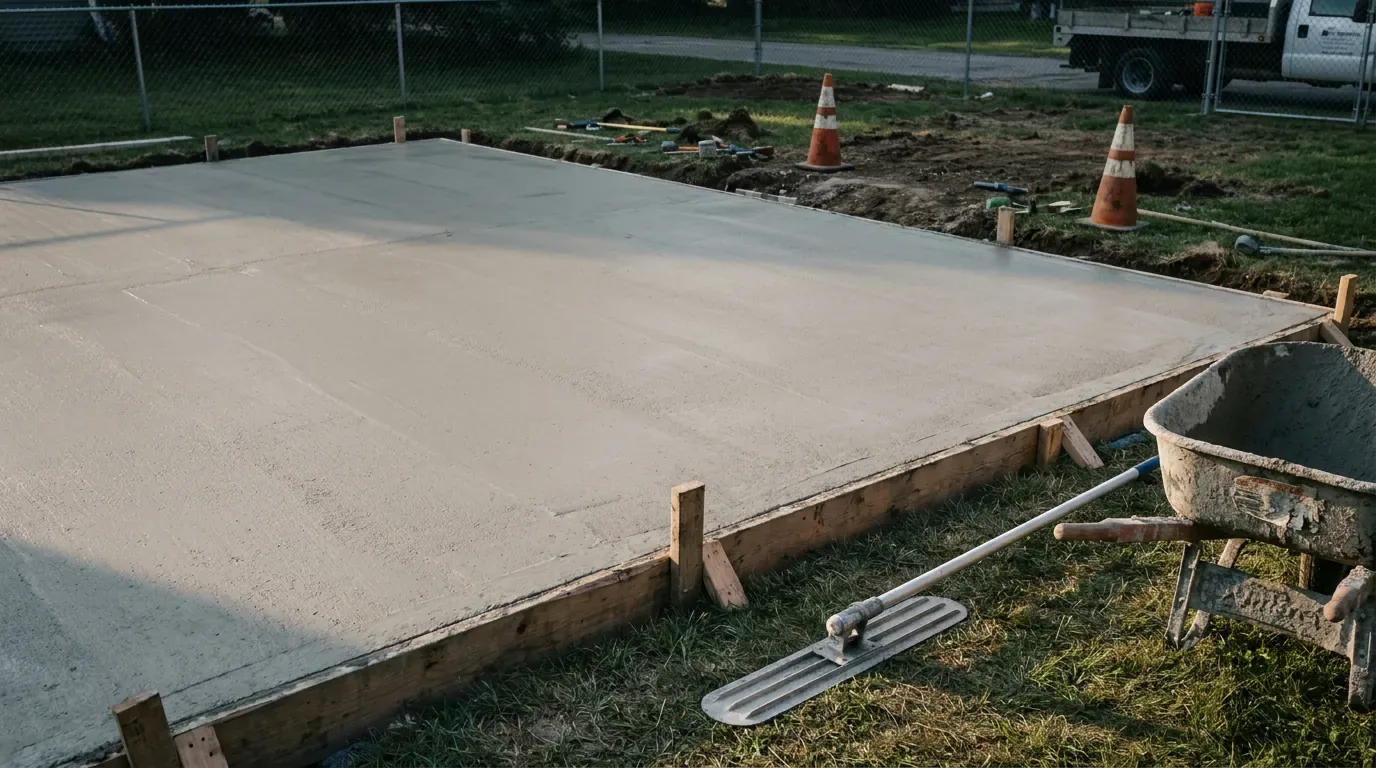
A concrete court costs $12,400 to $31,900. It takes 7 to 10 days to build, then about 28 days to cure. To cure means to let the concrete dry and harden.
A concrete court can last 25 to 30 years.
Both need resurfacing now and then. Resurfacing means a fresh top coat on an old court. Asphalt needs it every 5 to 15 years, and concrete every 8 to 15 years.
In cold winters, concrete holds up better than asphalt.
These figures come from the websites PickleTile and Top Flooring, and the price guide HomeGuide.
What an asphalt or concrete court costs
Of the two, asphalt is the cheaper choice.
Our prices are for a pad of 30 by 60 feet for each court. That is bigger than the playing area, which is 20 by 44 feet. The extra room beyond the lines lets players move safely.
Two painted asphalt courts cost $17,600 to $53,000. Two painted concrete courts cost $24,800 to $63,800.
Four asphalt courts cost $35,200 to $106,000. Four concrete courts cost $49,600 to $127,600.
These prices include site work, which means clearing and shaping the ground. They also include the base, the acrylic surface, the game lines and a net with posts.
For one court, the asphalt pad alone costs $5,400 to $12,600. The concrete slab alone costs $9,000 to $18,000. A slab is the flat block of poured concrete the court sits on.
Fences and lights are not included in these prices. For one concrete court, a fence costs $1,800 to $6,300. Lights cost $5,000 to $10,000.
Where you live changes the price too. One painted concrete court might cost $11,600 to $29,800 in Iowa. In Hawaii, the same court costs $13,200 to $34,100.
How long does each one last?
A concrete court usually lasts 25 to 30 years. An asphalt court lasts about 10 to 15 years.
Asphalt also needs regular care, including sealing. Sources don't agree on how often to seal it. One says every 2 to 3 years, and another says every 3 to 5 years.
Whichever base you choose, the acrylic top needs a fresh coat every few years. The surface should also be pressure washed every 12 to 18 months. This means cleaning it with a strong jet of water.
Resurfacing a court costs about $1,500 to $3,500.
Knee and joint comfort
Asphalt has a little more give, so it feels a bit softer to play on. Concrete absorbs very little shock, so it can be hard on your joints.
If comfort matters most to you, you can add a softer layer over either base. Cushioned acrylic is the acrylic coating with soft rubber layers under it. Snap-together tiles are another choice for players who want extra give.
Both of these cost more. For one concrete court in the US, a plain painted finish costs $12,400 to $31,900 on average.
With cushioned acrylic, the same court costs $15,100 to $37,300. With snap-together tiles, it costs $18,700 to $60,700.
Freezing winters and summer heat
Some places have winters where the ground freezes and thaws again and again. There, asphalt is more likely to be damaged than concrete.
In those places, builders usually advise a concrete slab 5 to 6 inches thick. You will also want that thicker slab if vehicles will drive across the court.
Heat is another weak spot for asphalt. It does poorly in very hot weather. Any outdoor court also needs a surface that can stand up to the sun.
Pickleball court drainage
Rain has to run off the court, so builders tilt the surface very slightly to one side. The tilt most often advised is 0.83% to 1%. That is about 1 inch of drop for every 100 inches of court.
Other builders use the same 1:100 slope.
Drainage starts under the base. Both asphalt and concrete usually sit on a layer of crushed stone about 4 to 6 inches deep. This stone is packed down hard over the soil.
What's inside each base?
An asphalt court uses hot-mix asphalt, which is asphalt laid while it is hot. It is spread 2 to 3 inches thick on top of the packed stone. It goes down fast.
A concrete court uses a slab with steel inside to make it stronger. One suggested plan is a slab 4 inches thick, made from 4000 psi concrete with half-inch rebar. Rebar means steel bars inside the concrete.
The psi number tells you how strong the concrete is. The best finish for concrete has some texture. It should not be polished smooth.
Some builders use a post-tension slab. This is a slab with steel cables pulled tight inside so it cracks less. It allows bigger sections with fewer joints.
Why does curing matter?
Curing is the time a new base needs to harden and settle before it is painted. Concrete needs about 28 days before the acrylic surface can go on. Asphalt needs about two weeks to a month.
Asphalt is laid in 3 to 5 days, and concrete in 7 to 10 days. Even so, allow several weeks before either court is ready to play on.
Which base suits your court?
Choose asphalt if a low cost matters most, your winters are mild and you don't mind sealing it often. Choose concrete if you want a base that lasts longer or your area gets hard freezes. Concrete does cost more at the start.
Either base can have a cushioned coating or snap-together tiles to make it easier on your joints. Both bases are also used under indoor courts.
Where to go from here: get a price for your court or see who builds courts in your state.